What is a Montessori “work area”?
A Montessori work area is a clear place where a child can choose an activity, do it, and put it back.
A work area can be:
- a small rug on the floor
- a child-sized table
- a tray on a low shelf
- a rolling cart with 3–5 choices
In Montessori, “work” means hands-on learning—not worksheets.
How do work areas help children in small spaces?
When space is tight, work areas help children: 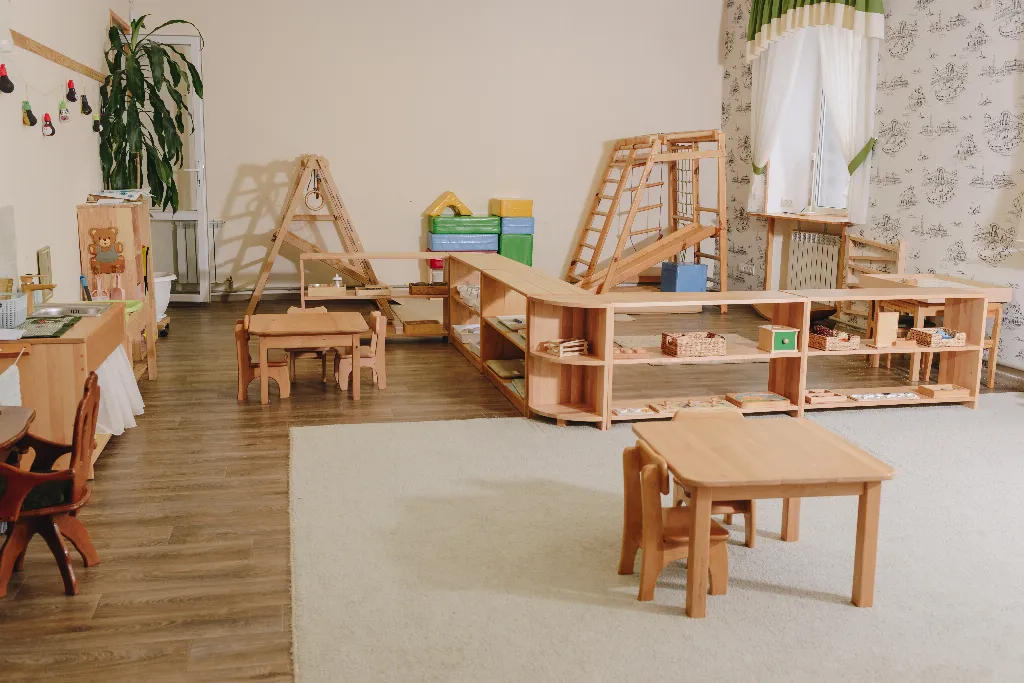
- move #safely (less bumping into each other)
- stay focused (fewer distractions)
- learn to clean up (everything has a place)
- make choices (independence grows)
Small spaces often work better when the room is organized on purpose.
How can you set up work areas when you don’t have much room?
Start with one simple rule: “Less is more.” Too many toys or shelves can make small rooms feel crowded fast.
Try this simple plan:
- Pick 3–5 work areas total
- Put out 6–12 activities (depending on age and group size)
- Rotate materials weekly or every 2 weeks
- Keep walkways open (clear “paths” through the room)
Quick tip for small rooms
Choose activities that are:
- easy to carry (tray, basket, small bin)
- easy to reset (few pieces)
- easy to clean (simple, sturdy items)
What are the best Montessori work areas for small spaces?
Here are small-space-friendly work areas that fit Montessori well:
- Practical Life area (pouring, wiping, spooning, dressing frames)
- Language area ( #books, sound games, matching cards)
- Math area (counting, sorting, number games)
- Sensorial area (texture, color tablets, shape matching)
- Peace/Calm area (breathing tools, feelings cards, quiet books)
If you only have room for three, start with:
- Practical Life
- Language
- Calm area
Practical Life is often the best “starter” area because it builds focus and self-control.
How do you create clear boundaries without walls?
In a small room, children need visual boundaries. Montessori uses simple signals like rugs and shelf space.
Try these boundary tools:
- Work rugs or mats (each rug = one child’s workspace)
- Painter’s tape on the floor (shows where shelves/areas “live”)
- Low shelves as room dividers ( #safer than tall ones)
- Trays and baskets (one tray = one activity)
Keep it easy: “Choose a rug, carry one tray, then put it back.”
What shelves and storage work best in tight spaces?
Look for low, open shelves. Children should see choices and reach them without help.
For practical, step-by-step advice on selecting the correct shelf height, arranging materials for independence, and organizing a child-accessible display, see How to set up a Montessori shelf at home.
Small-space storage ideas:
- One main shelf wall (everything faces one direction)
- Corner shelf (turn unused corners into learning space)
- Rolling cart (great for rotating activities)
- Vertical storage (hang clipboards, aprons, or small rugs)
- Stackable trays (keeps shelf space neat)
Also, store extras out of sight (in a closet or labeled bins). Only put out what children can truly manage.
How many materials should you put out at one time?
A helpful Montessori guide is: fewer, better choices.
For #toddlers and #preschoolers in a small room, try:
- 2–4 choices per area
- 1–2 “favorite” works that stay out longer
- Rotate the rest
If children dump, scatter, or rush, it often means:
- too many choices
- The work is too hard
- The room feels too busy
That is not “bad behavior.” It is information you can use.
How can you set up a Practical Life work area in a tiny space?
Practical Life can fit almost anywhere, even on one small shelf. 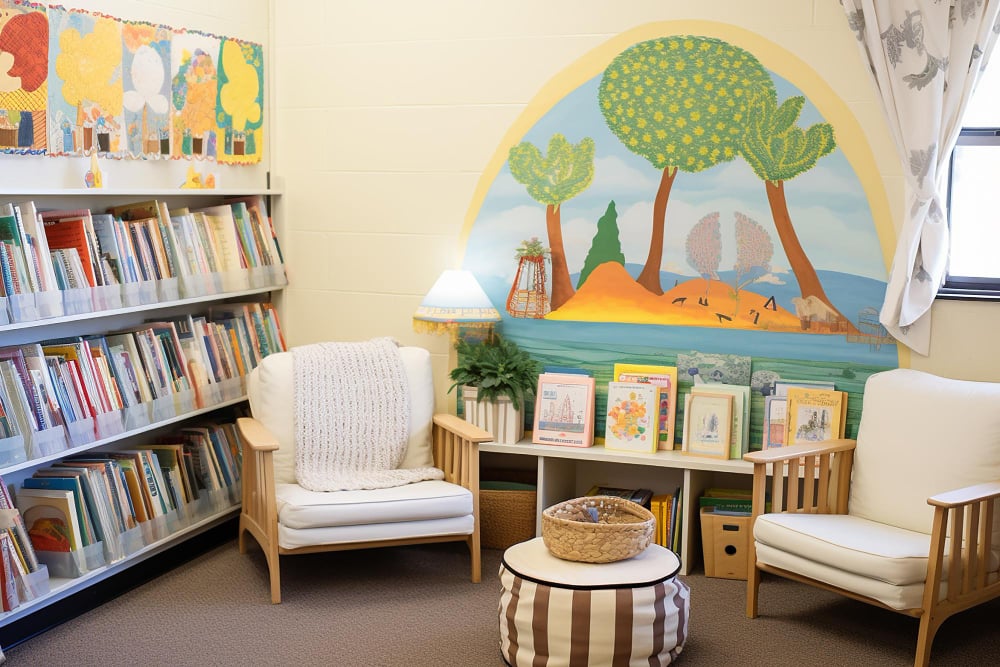
Include works like:
- spooning or tonging (pom-poms, cubes, large beads)
- pouring (dry first—like beans—then water later)
- wiping a small table
- handwashing steps (if a sink is nearby)
A #free ChildCareEd resource that fits this topic well is The Snack Station Buy Now $0.00, which supports independence and responsibility (and can be a simple work area in small spaces): Buy Now $0.00
How do you keep small-space Montessori work areas calm and safe?
Small spaces feel calm when traffic flows smoothly.
Use these #safety habits:
- Keep shelves against walls when possible
- leave a “walking lane” through the room
- Limit “big body” #play indoors (save it for outside)
- Place breakable works on higher shelves (adult level), if needed
- Teach carry rules: “Two hands. Walk feet.”
A smart layout prevents many problems before they start. For more general #classroom layout tips, this ChildCareEd article is helpful: Tips for designing your #early-childhood #classroom-space
How do you teach children to use work areas (and clean up) in a small room?
Montessori teaching is calm and clear. You show the child what to do.
Use this simple three-step lesson:
- Show (slow hands, few words)
- Invite (“Now you try.”)
- Close (return it exactly to its spot)
Helpful clean-up phrases:
- “One work at a time.”
- “Carry with two hands.”
- “Put it back where you found it.”
When children know the routine, small spaces feel much bigger.
Which Montessori4Teachers courses can help you build better work areas?
If you want deeper training on setting up Montessori spaces and choosing materials, these courses from Montessori4Teachers match this topic:
- The Prepared Environment: Montessori Class Design
 Buy Now $16.00
 - Implementing the Montessori Curriculum Buy Now $32.00
- The Montessori Assistant's Toolkit Buy Now $40.00
Want more Montessori setup tips and free tools?
Follow ChildCareEd on social for weekly ideas, training updates, and freebies. Start here and choose your favorite platform: https://linktr.ee/childcareed.
Small spaces can absolutely support Montessori. Start with one shelf, one rug, and a few strong choices. When the room feels peaceful and ordered, children usually become more peaceful and organized, too.
- Understanding Montessori’s Approach to Child Development
- Applying Montessori Principles at Home: A Guide for Parents
- Montessori Education: Prioritizing Health and Safety
- Emphasis on Movement in Montessori Education
- Focus on Nature and Real-World Experiences in Montessori Education
- The Purpose of Practical Life in Montessori Education
- The Montessori Classroom: Fostering Independence and a Love for Learning
- Montessori & You: A Perfect Match?
- Montessori Magic at Home: Tips for Every Age
- 🌟 What Happens When Montessori Meets Music and Rhythm?
